 Bundle & Save
 Camping Chair
 Hammocks
 Tote Bag
 Cooler & Coffee Cup
 Beach Towel
 Hooded Towels
 Picnic Blankets
 Bags & Backpacks
 Cooler Backpack
 Outdoor Puffy Blankets
 Tarp, Bug Net & Accessories

Swag Camping vs Hammock Camping: Which is Better?

There are roughly two types of campers in this world.
- Those who arrive with the car packed to the ceiling, enough cooking equipment to open an outdoor restaurant and a sleeping setup more elaborate than the one they have at home.
- And those who reckon camping should involve, well, less stuff.
Neither is wrong. If hauling a mattress into the bush brings you joy, who are we to stand in your way? But if your idea of a good camping trip involves throwing a few things in a backpack, finding somewhere beautiful and spending as little time as possible assembling your temporary outdoor residence, you’ve probably looked into a hammock or a swag.
And now, you probably are trying to decide which is the right setup for your camping style. Well, here’s how the two compare.
What is Swag Camping?
The humble swag has been part of Australian camping for a very long time, although the modern version is a fair bit fancier than the canvas bedrolls carried by swagmen back in the day.
Today, a camping swag is essentially an all-in-one sleeping setup, usually combining a canvas or fabric shelter with a built-in mattress. Some are relatively simple, while larger models can feel more like tiny tents complete with poles, ventilation panels and enough room to sit up inside.
The appeal isn't difficult to understand. You get a mattress underneath you, protection around you and a familiar, flat place to sleep. Roll it out, set it up, and you've basically brought a tiny bedroom camping.
The trade-off is that bedrooms aren't particularly lightweight.
Swags can be bulky and heavy, particularly once you start adding thicker mattresses and bedding. That's not much of an issue when you're pulling into a campsite in a ute or 4WD, but it becomes much more noticeable when you're carrying everything yourself.

What is Hammock Camping?
Hammock camping takes a different approach: instead of trying to recreate your bed outdoors, you simply get yourself off the ground altogether.
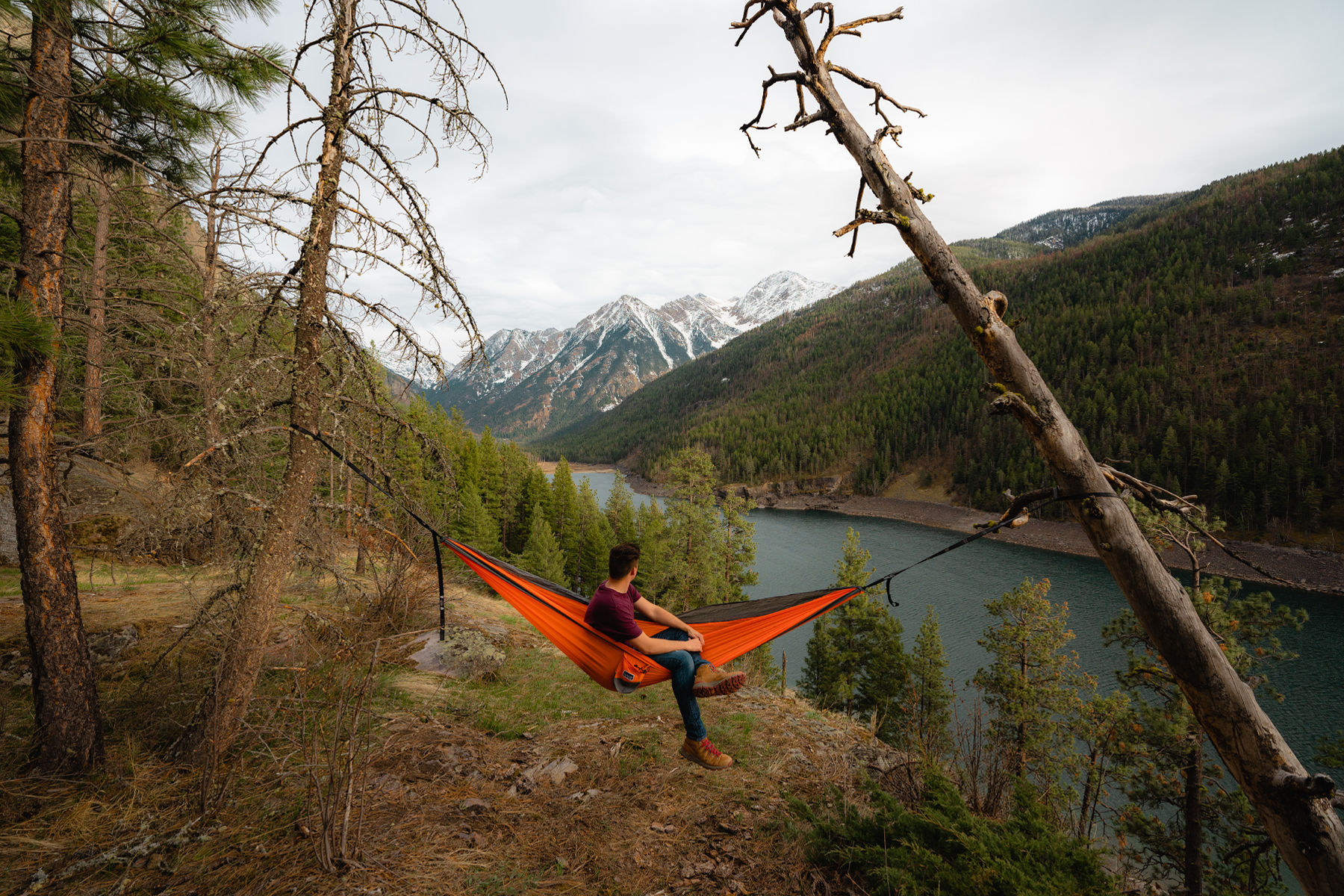
A camping hammock is suspended between two secure anchor points, usually trees, using straps designed to distribute the load without damaging the bark. Depending on where and when you're camping, you can then add a tarp for rain protection, a bug net for unwanted guests and extra insulation like a puffy blanket when temperatures drop.
The obvious advantage is size. A hammock can pack down small enough to chuck into a backpack, making it handy for hiking, bikepacking, festivals, road trips and last-minute adventures.
You're also not relying on the ground being flat, soft or particularly cooperative. Tree root exactly where your shoulder would go? Not your problem. Rocky ground? Also not your problem. Mystery damp patch? Very much not your problem. You're floating above the lot of it.
Swag Camping vs Hammock Camping: Which is More Comfortable?
This is the first question most people ask us, because being adventurous is lovely until you've had four hours of sleep and your neck won't turn left.
A swag has the advantage of familiarity. You're sleeping on a mattress, on a relatively flat surface, and you can move around much as you would in a normal bed. Side sleepers and people who change position approximately 700 times per night may particularly appreciate that.
Hammocks feel different, and there can be a little technique involved.
One of the biggest mistakes first-time hammock campers make is sleeping directly along the centre of the hammock, which bends your body into the classic banana shape. Instead, lying slightly diagonally across the hammock allows the fabric to flatten beneath you and creates a much more natural sleeping position.
Get your hang right and a hammock can be ridiculously comfortable. Your body is supported without the pressure points you can get from sleeping on hard or uneven ground, and there's something super lovely about gently swinging yourself to sleep.
Will everybody prefer it to a mattress? Probably not.
But don't write hammock camping off because you've spent ten minutes lying badly in a cheap backyard hammock at someone's barbecue. Sleeping in a well-set-up camping hammock is a very different experience.

Which is Easier to Set Up?
Swags have a reputation for being easy to set up, and generally they are.
Depending on the design, you roll the swag out, insert a few poles, peg it down and sort out your bedding. Once you've done it a few times, the whole operation becomes pretty straightforward.
A hammock can be simpler still. Find two suitable trees. Wrap your straps around them. Attach your hammock. Adjust until you're happy. Done.
Related Read: The Beginner's Guide to Hammock Camping
Of course, there's a small learning curve here too. Tree spacing is important, the height of your straps is also important, and you don't want your hammock pulled so tightly it could double as a trampoline.
If rain is forecast, you'll also need to set up a tarp or suitable rain cover. If mozzies are out in force, you'll want bug protection.
Still, once you know your setup, hammock camping can involve remarkably little faffing around, which is exactly what you want when you've walked all day and dinner is currently looking much more interesting than shelter construction.
What About Packed Size and Weight?
Swags are not subtle pieces of luggage. Even a relatively compact swag usually includes a mattress, substantial outer material and structural components, which means you're dealing with a decent-sized roll once everything is packed away.
Again, if you've got a car, who cares? Throw it in the back and off you go.
But if you're hiking, cycling or simply trying to avoid playing boot Tetris every time you go camping, packed size matters.
A hammock can take up a fraction of the space. That makes it easier to keep one handy, too. You don't necessarily need to plan an entire camping expedition around it. Chuck your hammock into your backpack or car, and it's there if you find somewhere you want to stop.
And that, we reckon, is one of the underrated joys of travelling lighter: you're more likely to actually go.
Where Can You Camp?
This is the big win for swags, so we'll happily give it to them. A swag needs a reasonably flat patch of ground, while a hammock needs two suitable anchor points.
If you're camping somewhere with plenty of sturdy trees, no dramas. But if you're heading into the desert, onto an exposed beach or anywhere else trees are scarce, your hammock may suddenly become a very nicely packed piece of fabric with nowhere to go.
You also need to check local camping rules, because hammocks aren't permitted everywhere and you should never attach one to structures or vegetation where doing so could cause damage.
Swags aren't completely free of campsite considerations either. You need enough flat space to roll one out, and rocky, muddy, sloping or heavily rooted ground can make finding a comfortable spot surprisingly annoying.
This is where hammocks shine in forests and bushland. The ground underneath you can be uneven, rocky or damp, and it makes very little difference to your night's sleep.
Provided you've got two good trees, you're golden.

Which is Better in the Rain?
This isn't so much about swag camping versus hammock camping and more about whether you've brought the right gear.
A good swag gives you an enclosed shelter with weather-resistant material around you. Set it up in a sensible location, and you've got a cosy little space to retreat into when the weather turns.
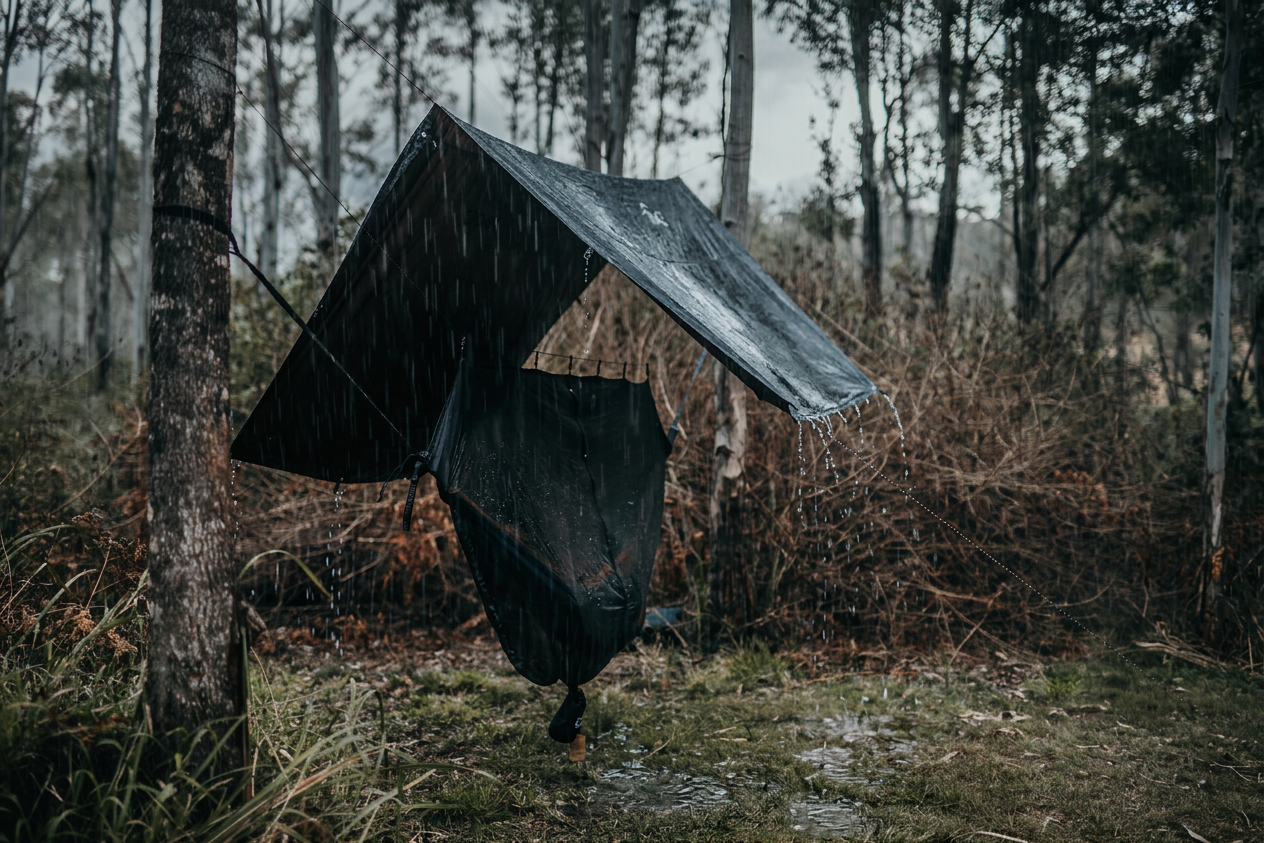
Hammock campers generally use a tarp or rain fly suspended above the hammock. Set up correctly, this creates a dry sleeping area while still keeping you elevated above wet and potentially muddy ground.
And being off the ground becomes quite appealing when you wake up after six hours of rain and discover your campsite has developed waterfront views.
The important thing with either setup is choosing your site properly. Don't camp in drainage channels, underneath dodgy branches or anywhere that looks suspiciously like it becomes a creek whenever the sky gets grumpy.
Related read: Nakie's Tips for Dry and Cosy Camping
Which is Better for Cold Weather Camping?
Here's something new hammock campers sometimes discover the hard way: your bum can get surprisingly cold.
Because air circulates underneath a hammock, heat can escape from below your body. Your sleeping bag also compresses underneath you, which reduces its insulating ability.
In warm Australian conditions, that airflow can be glorious. When temperatures drop, not so much.
The solution is extra insulation, usually in the form of an insulated sleeping mat or blanket that hangs in the hammock.
Swags have a natural advantage here because you're lying on a mattress, which creates insulation between your body and the ground. You'll still need a sleeping bag or bedding appropriate for the overnight temperature, but you aren't exposed to moving air underneath you.
So if you're heading into cold conditions, a swag can be the simpler setup. Hammock camping is still absolutely doable; you just need to pack for it.
Which is Better for Summer Camping?
On a hot Aussie night, having air circulating underneath you is an absolute delight.
Instead of lying on a mattress inside an enclosed shelter, you're suspended in the breeze with plenty of airflow around your body. Add appropriate bug protection, and you've got yourself a very nice place to spend a balmy night.
And because you're off the ground, you're also putting a little distance between yourself and some of the crawling things that call the Australian bush home (we make no promises about the flying ones, though – but that's what a bug net is for!)
Hiking and Overnight Adventures
If you're carrying everything on your back, every bit of weight is important. That thing you cheerfully threw into your pack at home becomes your mortal enemy somewhere around kilometre 12.
This is where a lightweight hammock setup really starts to make sense. Instead of carrying a bulky swag and mattress, you can pack your hammock and whatever additional shelter and insulation the conditions require. The exact weight will depend on your setup, of course, but hammocks are generally much easier to incorporate into a lightweight camping kit.
That makes them particularly appealing for overnight hikes and multi-day adventures through areas where you know suitable trees will be available.
For car camping, the weight difference matters much less. But there's still something nice about opening your boot and not having your sleeping setup occupy half of it (more room for snacks, obviously).

Swag Camping vs Hammock Camping: Which Should You Choose?
If your idea of camping involves pulling the 4WD into a campsite, rolling out your sleeping setup and enjoying something close to a conventional bed, a swag is difficult to fault.
But if you want to travel lighter, pack smaller and make sleeping outside as simple as possible, hammock camping is truly the way to go.
And perhaps more importantly, it's handy beyond bedtime.
Take it camping and sleep in it. Bring it on a day hike and stop for lunch. Hang it beside the river and read a book. Chuck it in the car on a road trip because you might find two excellent trees somewhere along the way.
Try Hammock Camping with Nakie
We're not here to start a turf war with the swag people. Swags are comfy. They're sturdy. And if you've got half a ute tray available for your sleeping setup, go forth and enjoy that mattress.
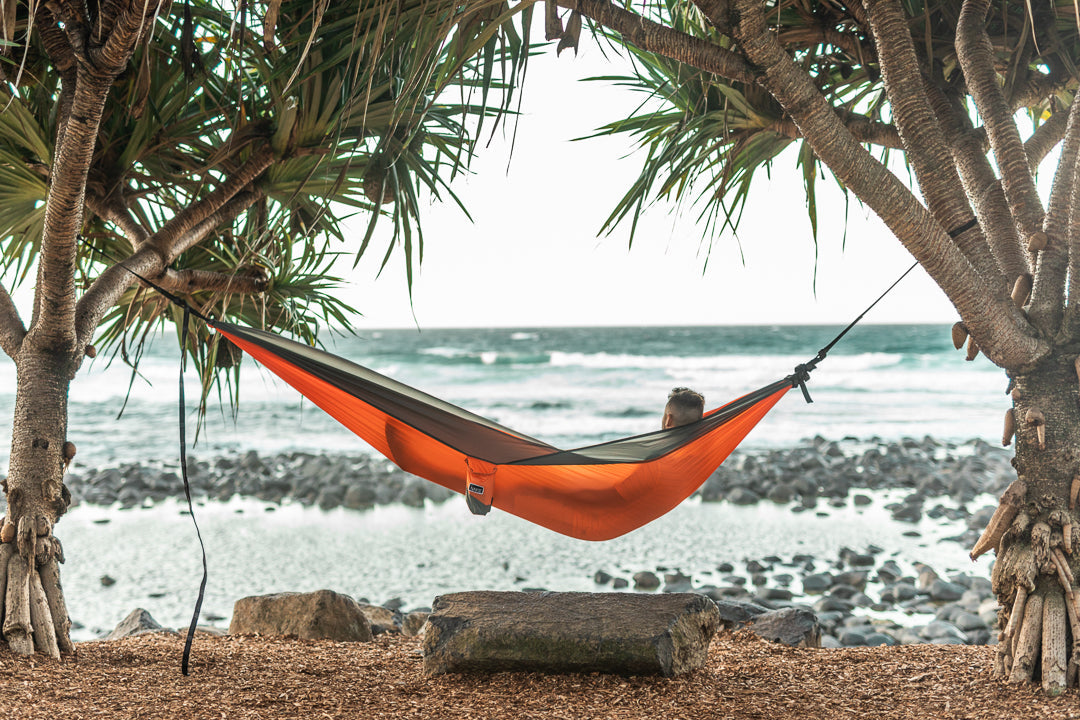
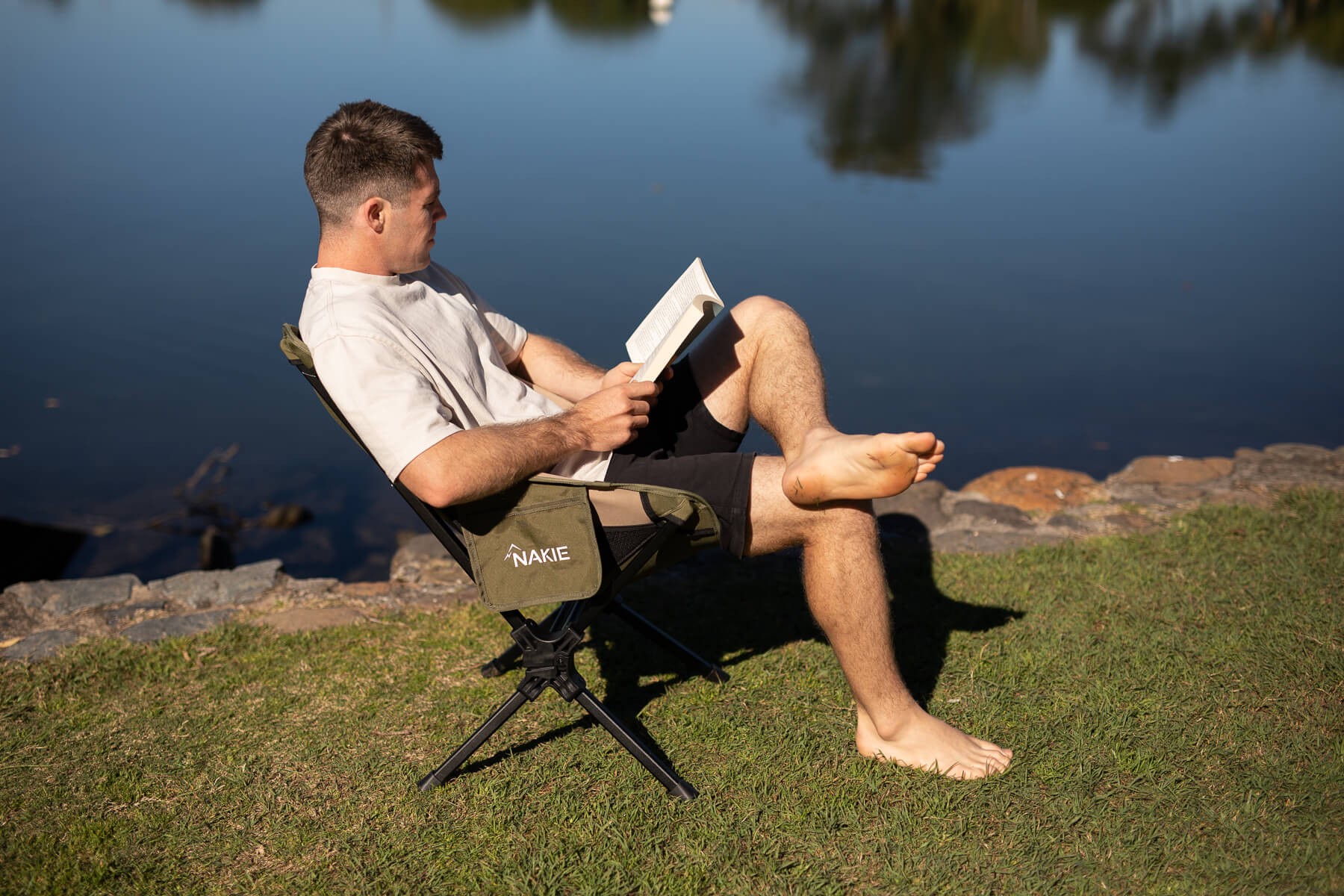
We just happen to like camping a little lighter. A hammock can pack down small enough to come along on adventures where you might never bother bringing a swag. Throw it in the car. Clip it to your backpack. Take it hiking. Bring it to the beach. Hang it at camp even if you're not planning on sleeping in it, because lying horizontally with a book and absolutely nowhere else to be is reason enough.
And when two perfectly spaced trees present themselves at the end of the day? Well, it would be rude not to.
Shop Nakie hammocks and take your sleep somewhere better.
FAQs
Can you sleep in a hammock all night?
Yep. A camping hammock can be used for a full night's sleep when it's set up correctly. Sleeping slightly diagonally across the hammock rather than directly down the middle can create a flatter, more comfortable position.
Is hammock camping comfortable?
It can be extremely comfortable once you get the setup right. Because a hammock conforms to your body, you don't have rocks, roots or hard ground creating pressure points underneath you. Comfort is personal, though, and it can take a little experimenting with your hanging angle and sleeping position to find what works for you.
Can you hammock camp anywhere?
Depends on how resourceful you are. You need suitable anchor points, such as sturdy trees positioned an appropriate distance apart, and hammocks may not be allowed in every campground or protected area. Always check local rules and use tree-friendly straps rather than ropes or attachments that could damage bark.